Portfolio and Art Criticism Essay
The Portfolio is a formal assessment component reflecting a candidate's regular practice, creative process, and overall development.
Grades 1–3 must submit 3 pieces; Grades 4–5 must submit 4 pieces; Grades 6–8 must submit 3 pieces.
The first 2026 Hong Kong examination session is provisionally open only to Grades 1–5, so the Grades 7–8 Art Criticism Essay requirement does not apply to this session.
General Portfolio Requirements
Candidates for Grades 1, 2, 3 and Grades 6, 7, 8 must submit 3 artworks; candidates for Grade 4 and Grade 5 must submit 4 artworks. Each artwork must include the title, completion date, medium used, dimensions, and process photographs. All candidates must also submit a Candidate Declaration of Originality; for minor candidates, this must be submitted by a parent or guardian.
Grades 1 to 4: A brief creative process description is not required.
Grades 5 to 8: Each artwork must include a brief creative process description, with a recommended word count of 50–120 words in Chinese or 40–100 words in English.

Brief Description of the Creative Process
Grades 5–8: Each piece of work must be accompanied by a brief description. Content may include the creative theme, media used, a summary of the creative process, as well as self-reflection or technical highlights.
Suggested word count: 50–120 words in Chinese; 40–100 words in English.
Progress Photo Requirements
Each piece must be accompanied by 2–5 progress photos clearly showing the initial sketch or layout, mid-stage development, near-completion stage, and the finished work.
Progress photos may include:
Drafts or initial compositions
Mid-stage development
Stage approaching completion
Finalised artwork
Portfolio Media Guidelines
Grades 1–4
For the Grade 1–4 Portfolio, it is recommended to use a single dominant medium consistent with or highly similar to the one used in the examination.
Grades 5–8
For Grades 5–8, there are no restrictions on pigments; candidates may choose to use one or more types of pigments/drawing tools. Works can be created using a single medium or mixed media.
Grades 7–8 Art Criticism Essay
Candidates for Grade 7 and Grade 8 are required to submit an Art Criticism Essay. The essay may be written in Traditional Chinese, Simplified Chinese, or English; if a bilingual version is submitted, one language must be designated as the primary version for assessment. Recommended word count: 400–800 words in Chinese; 300–600 words in English.
The essay may include:
- Creative concept and thematic reflection; Reasons for choice of media; Reflection on the creative process and self-evaluation; Cultural or art history references; Connection between the work and personal perspective.
AI Usage Restrictions
Generative Artificial Intelligence must not be used to ghostwrite, rewrite, or automatically generate essay content; where dictionaries, spell checkers, basic grammar checks, or standard input tools are utilised, candidates must ensure the content remains their own original understanding and expression.
Sample Portfolio Works
The following samples demonstrate the common performance levels of Grades 1–4 regarding observation, composition, proportion, colour, light and shadow, and completion for the reference of candidates, parents, and teachers.
*These examples are for level understanding only and are not standard answers.


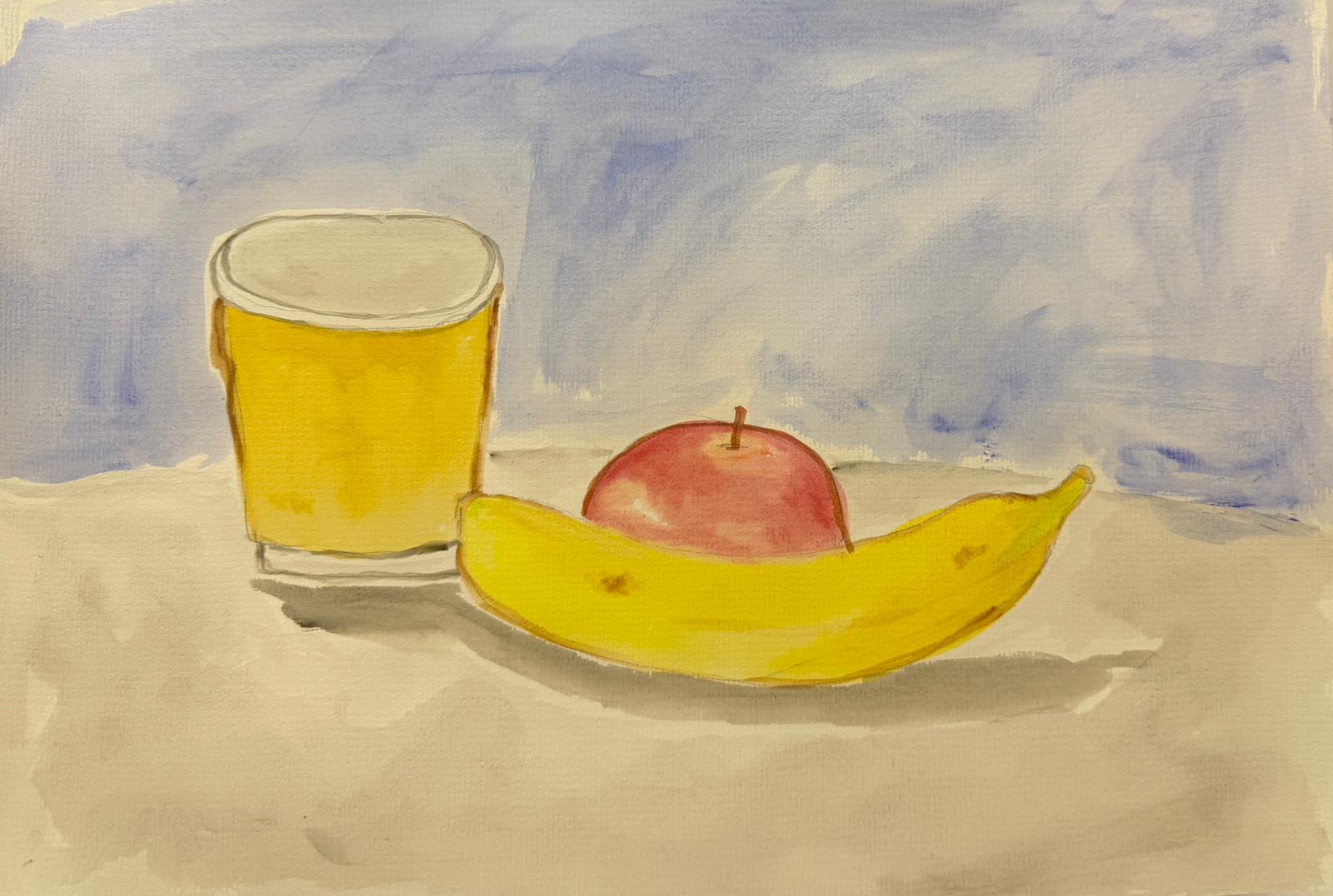
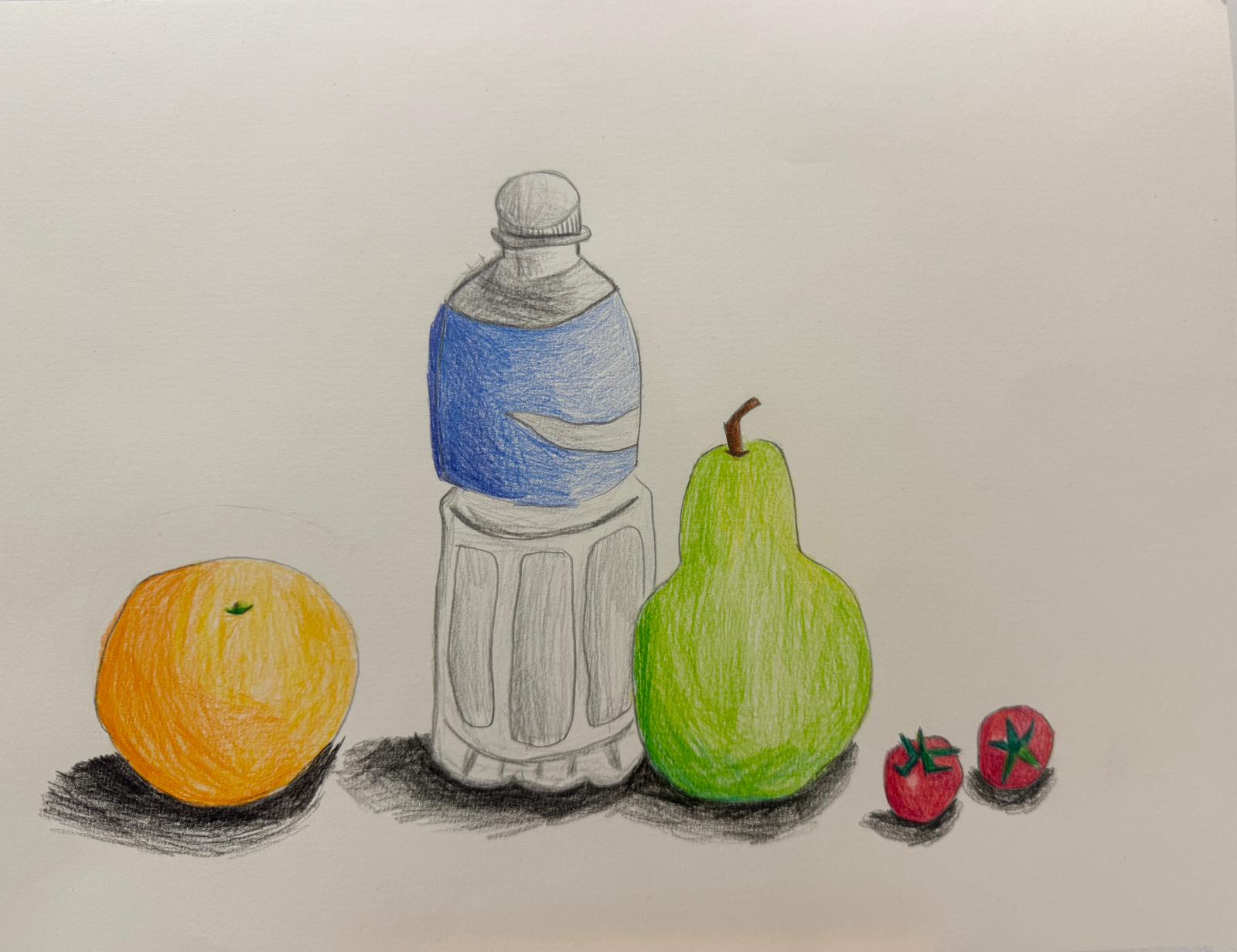
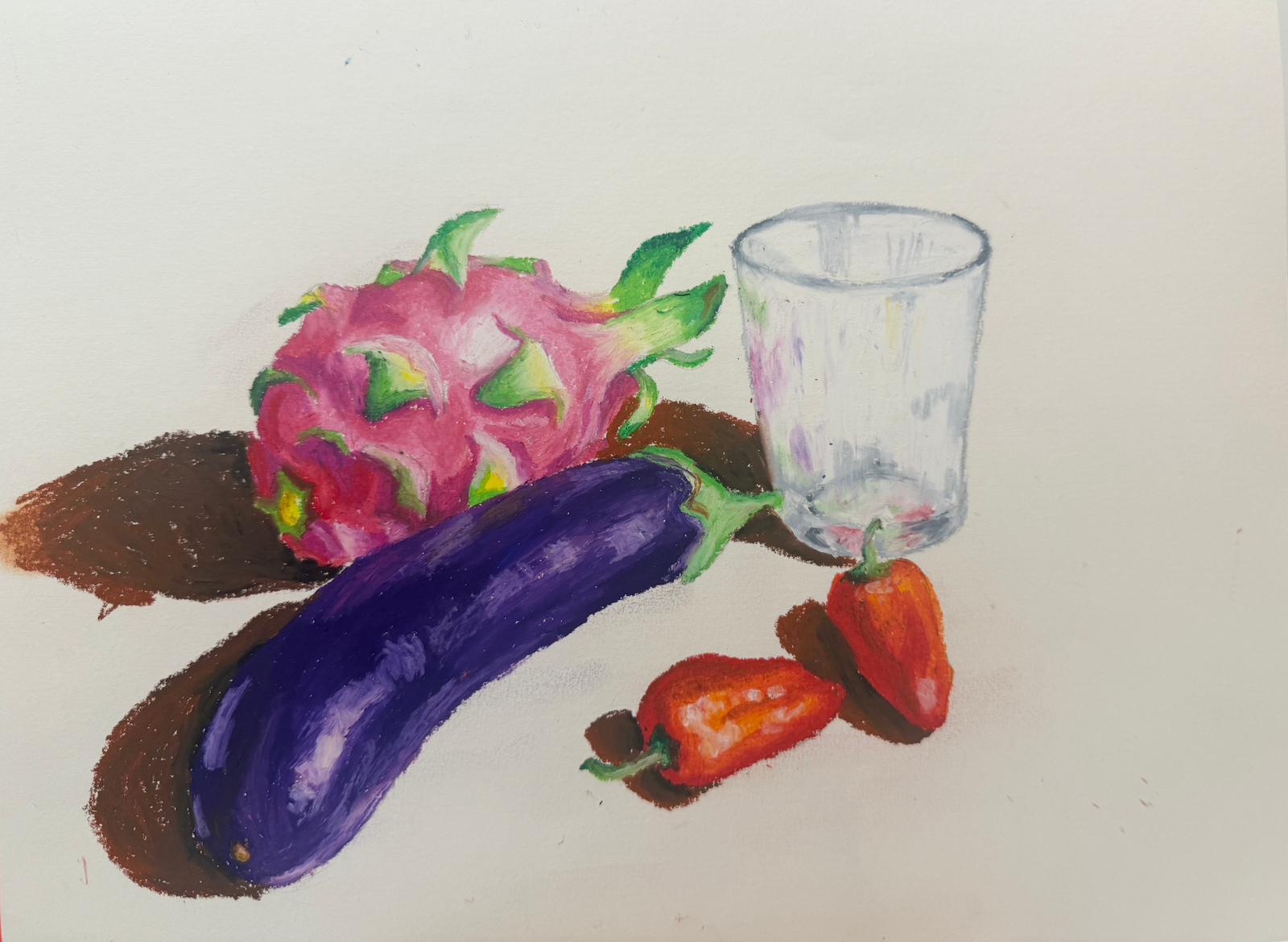
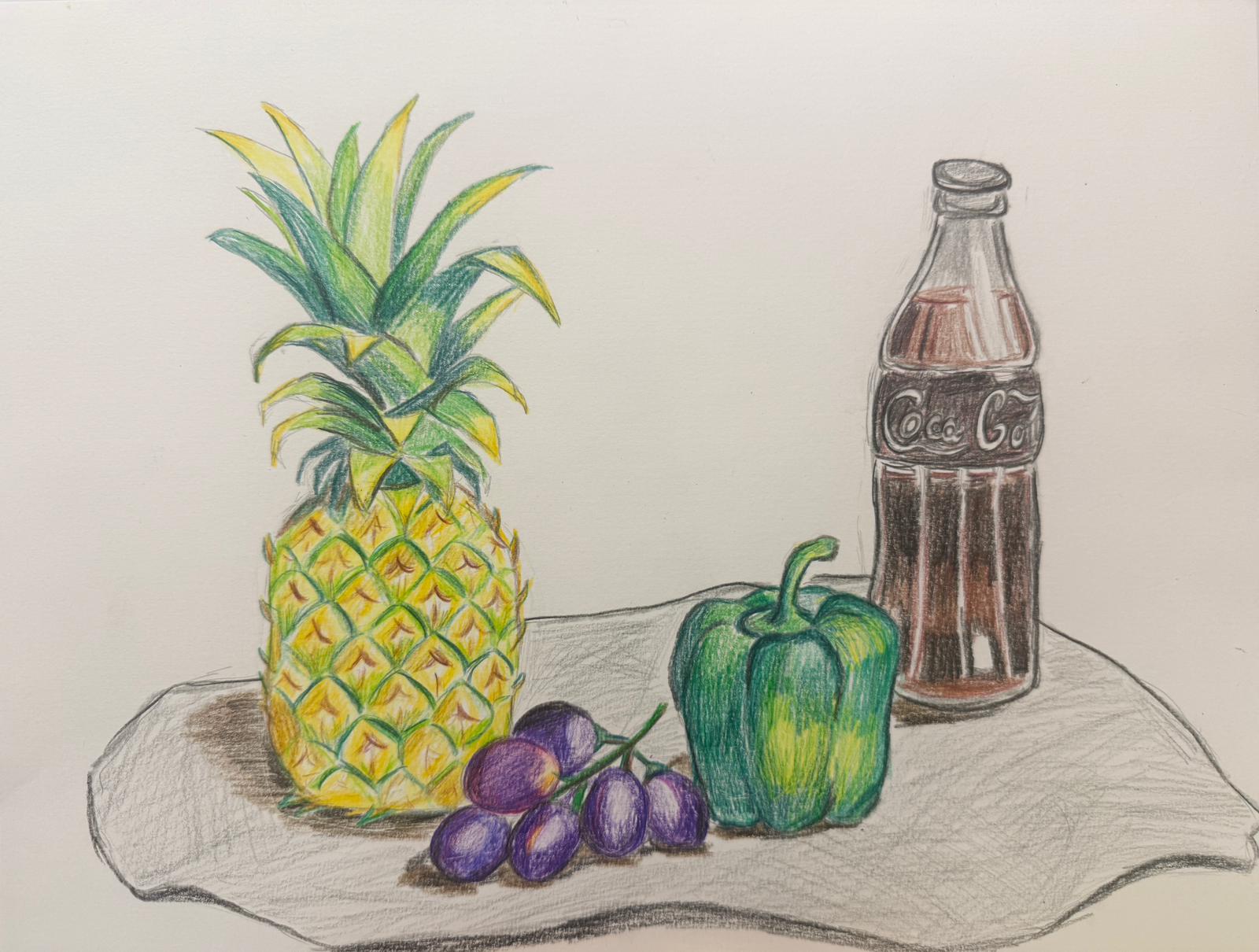
Selected Art Criticism: Sample Art Criticism Essay for Grade 7
Artwork Title: "Memories of the City"
My work is based on the theme "Memories of the City", depicting a corner where old and new buildings intersect. In the frame, skyscrapers represent the speed of modern life, while old-style signs, street lamps, and small shops symbolise the gradually disappearing memories within the city. I hope to express through this work that a city is not just a collection of buildings, but also carries the lives, emotions, and traces of growth of its people.
In terms of composition, I placed the old street in the foreground to let the audience see the more humanistic part first; the background includes skyscrapers in cooler tones to create a contrast between the new and the old. Regarding colour, I used warm tones to express the friendliness of the old district, and grey-blue to show the sense of distance in the modern city. This warm-cold contrast highlights the emotional conflict brought by urban change.
During the creative process, I referred to photos of old Hong Kong street scenes and observed the rhythm of shop signs, window frames, and street lines. What I wanted to emphasise most was not the accurate replication of a specific place, but the expression of the urban atmosphere in my memory. Through overlapping lines and a slightly blurred background, I hoped to create a sense of the passage of time.
After completing the work, I believe I was successful in theme expression and colour atmosphere, although some architectural proportions could be more accurate. If I were to create it again, I would strengthen the figures or life details to make the work more narrative. Overall, this piece made me reflect on the relationship between urban development and personal memory, and taught me that art can be used to preserve emotions that are nearing oblivion.